Why Val Thorens Suits Late or Early-Season Bookings
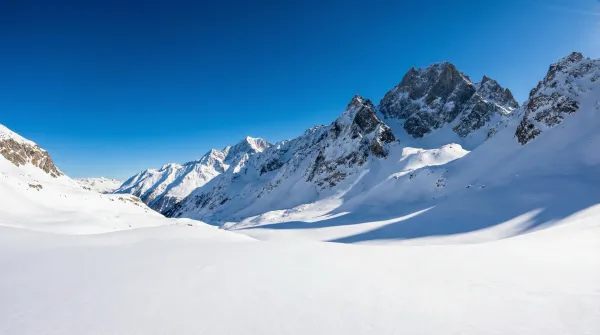
If you're booking a trip outside the busiest French school holiday weeks, Val Thorens' altitude is the reason to pick it over a lower resort: reliable snow cover from November to May and direct glacier access when other parts of the 3 Valleys are already looking thin.
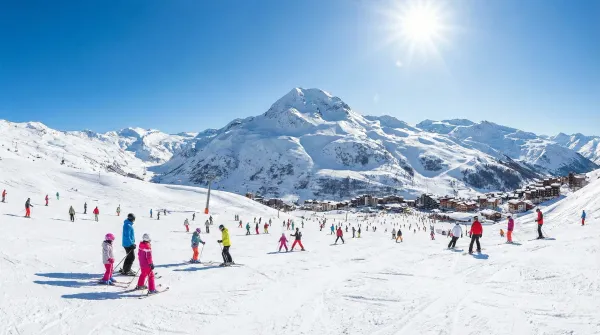
A private instructor also matters more here than elsewhere in the domain — the main lifts get busy fast at this altitude, and I route you around them toward Cime Caron or the quieter Maurienne side instead of queuing with the group-lesson crowds.
Freeride Access Without the Guesswork
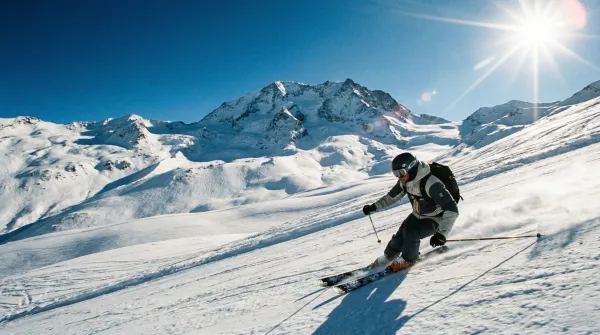
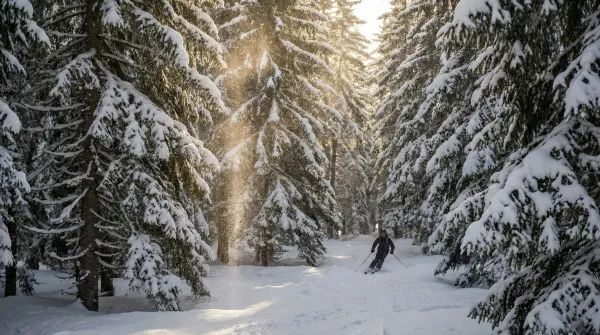
Val Thorens has some of the most accessible off-piste terrain in the Alps, which also means it's easy to end up somewhere you shouldn't be without local knowledge. I guide you into the resort's best hidden valleys with the route chosen for that day's snowpack, not a fixed itinerary.
Booking the Easter Fortnight: Why Altitude Decides the Week
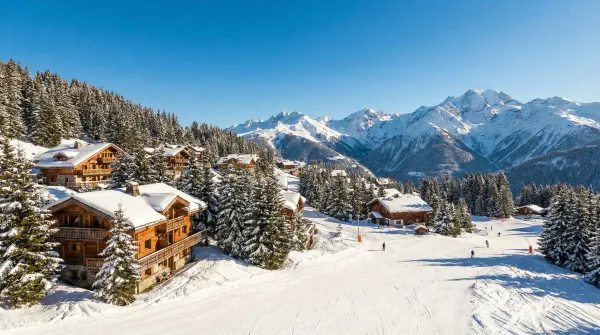
The UK Easter holidays move with the date of Easter itself, which means British families regularly end up booking a ski week well into April — a fortnight when the choice of resort stops being a matter of taste and starts being a matter of altitude. Val Thorens sits at a 2,300 m base with lifts running above 3,200 m and a large share of its terrain facing north, so it holds winter snow weeks after resorts down at 1,400-1,500 m have gone patchy at village level.
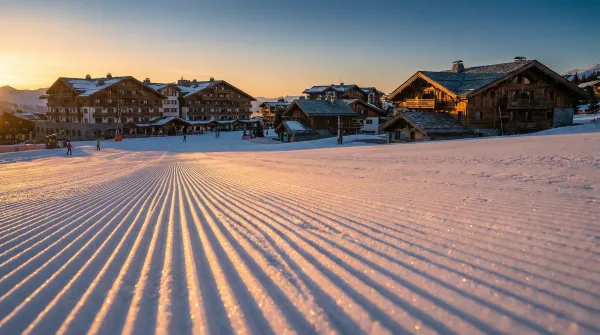
What changes at that time of year is the clock, not the quality. Spring snow firms overnight and softens through the morning, so an Easter day here is front-loaded: first lifts, the north-facing sectors while they're still cold, then east and south aspects as they come good, and a finish before the afternoon slush. I build the day in that order rather than starting at ten because the ski school timetable does.
The Last Forty-Five Minutes of the Transfer
Val Thorens is the furthest of the 3 Valleys resorts from the valley floor. From Moûtiers — the rail terminus, and where every road transfer converges — allow roughly forty-five minutes of continuous climbing on a hairpin road, gaining close to 1,800 m of altitude in that single leg. From Geneva airport, allow around three hours door to door, and considerably more on a peak Saturday.
Two things follow from that, and they're the ones UK guests most often wish they'd known. First, a fair number of people feel the altitude on the first evening — nothing dramatic, but headaches and broken sleep are common, and drinking properly on the way up helps more than anything else. Second, don't schedule your first lesson within a couple of hours of arriving: the resort is pedestrianised and ski-in/ski-out, so nothing is lost by starting fresh the following morning.
How Val Thorens Compares to Resorts in North America
Guests who usually ski Colorado or Whistler often ask how Val Thorens stacks up. The short answer is altitude and glacier access: at 2,300m base and over 3,200m at the highest lifts, you're skiing above where most North American resorts top out, and the snowpack behaves differently. I've coached in both systems — New Zealand and the US — so I adjust my cues rather than assume the technique that works on groomed Rockies corduroy translates directly to Alpine conditions.
The other adjustment is scale: Val Thorens connects into the wider freeride terrain of the 3 Valleys, so a week here typically covers more linked ground than a single North American resort pass.